Plant Care
How to find rare variegated plant species for sale online?
Apr
How to Find Rare Variegated Plant Species for Sale Online
Published by Variegated Plants Circle · variegatedplantscircle.com
Finding rare variegated plants online used to require deep connections inside closed collector communities, fluency in multiple plant forums, and the patience to monitor private social media groups for months before a coveted specimen appeared. The market has matured considerably — but navigating it well still requires knowing where to look, what to look for, and crucially, what to avoid.
This guide is the most complete resource available on finding rare variegated plant species for sale online. We cover every legitimate source, rank them by reliability and variety, explain what separates trustworthy sellers from problematic ones, and give you a practical framework for securing rare specimens safely — whether you are searching for your first collector-grade plant or expanding an already serious collection.
Why Rare Variegated Plants Are Difficult to Find
Before getting into sources, it helps to understand why genuinely rare variegated plants are not simply available everywhere.
Supply is structurally limited. Chimeric variegated plants like Monstera Albo and Philodendron Caramel Marble cannot be mass-produced through conventional propagation. Each cutting must come from an existing variegated plant, and each plant can only produce a limited number of viable cuttings per year without weakening the mother plant. Tissue culture has increased supply for stable varieties like Thai Constellation, but chimeric rarities remain production-limited by nature.
Demand consistently outpaces supply. The collector plant community has grown explosively over the last decade. Social media — particularly Instagram and TikTok — has introduced millions of people to rare variegated plants. Demand has grown far faster than supply for the most coveted varieties.
Quality varies dramatically. Even when a rare plant is technically available for sale, the quality of variegation, root development, pest status, and seller reliability varies enormously between sources. Finding a rare plant is one challenge. Finding a rare plant in excellent condition from a trustworthy seller is another.
Documentation requirements add complexity. International purchase of rare plants requires phytosanitary certificates and compliance with import regulations. Many sellers are not equipped to provide this, limiting the pool of reliable international sources considerably.
Understanding these constraints explains why dedicated specialist sources that have solved all of these problems simultaneously — supply, quality, documentation, and reliability — are so valuable to collectors.
The Best Sources for Rare Variegated Plants Online
Source 1: Dedicated Specialist Online Stores (Most Recommended)
A dedicated variegated plant store that focuses exclusively on rare aroids and collector varieties is the single most reliable source for the widest selection of genuine rare plants in one place.
Why specialist stores outperform all other sources:
They have established relationships with specialist growers and nurseries globally — relationships built over years that give them access to varieties that never appear on general retail platforms. They have developed international shipping expertise that ensures plants arrive alive and legally compliant. They provide phytosanitary certificates as standard. And they offer buyer protection — live arrival guarantees and return policies — that private sellers and auction platforms typically cannot match.
Variegated Plants Circle is the definitive example of this category. Established in 2013 — long before the collector plant market reached mainstream awareness — the store has spent over a decade building the sourcing relationships, shipping expertise, and documentation processes that make finding and receiving rare variegated plants straightforward for collectors worldwide.
What you can find at Variegated Plants Circle:
Every variety in the store is a genuine variegated collector plant. The catalogue includes some of the rarest and most sought-after species available anywhere online:
- Monstera Albo Variegata — the iconic white-splashed chimeric Monstera
- Caramel Marble Philodendron — extraordinary copper and cream new growth
- Monstera Mint Variegata — among the rarest Monsteras available
- Florida Beauty Variegated — distinctive multi-lobed Philodendron
- Rhaphidophora Tetrasperma Variegated — compact chimeric collector favourite
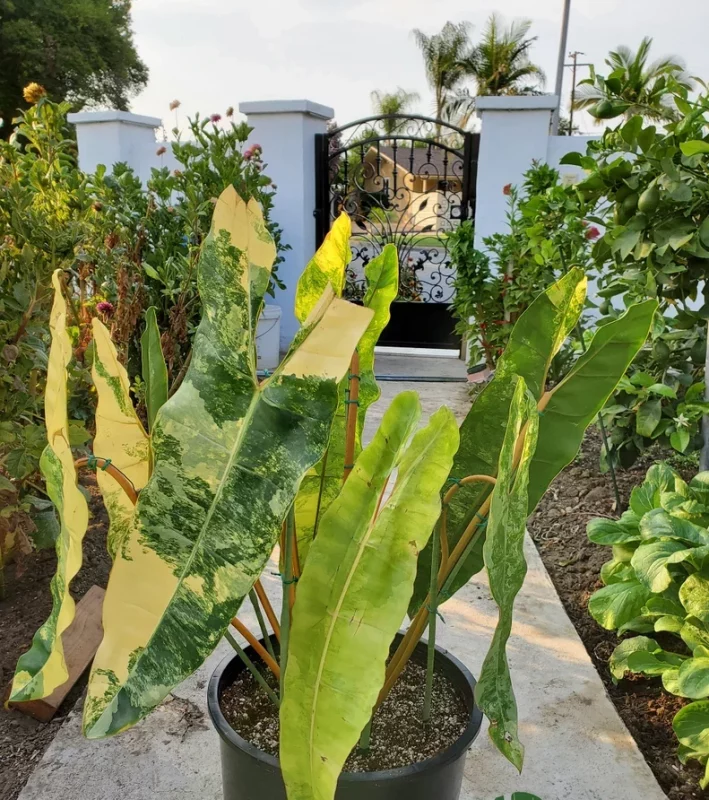
- Philodendron Billietiae Variegated — elongated leaves with cream variegation
- Philodendron Domesticum Variegated — glossy leaves with consistent variegation
- Philodendron Bipennifolium Variegated — the rare violin Philodendron
- Philodendron Ilsemanii Variegata — extraordinary rare collector piece
- Philodendron Ring of Fire Variegated — dramatic serrated hybrid
- White Princess Philodendron — elegant white-variegated climber
- Monstera Adansonii Variegated — rare fenestrated collector Monstera
- Pachypodium — striking succulent-adjacent collector species
All orders ship worldwide with tracked courier, phytosanitary certificates, and a 30-day live arrival guarantee.
👉 Browse the full rare plant collection at variegatedplantscircle.com/shop
Source 2: Specialist Collector Facebook Groups
Facebook groups dedicated to rare aroid and variegated plant buying, selling, and trading are where a significant portion of the rarest specimens change hands — often before they ever appear on formal retail platforms.
The most active groups include:
- “Rare Aroid Buy Sell Trade” (global, very active)
- “Variegated Plants — Buy, Sell & Trade”
- Country-specific groups: “UK Rare Plant Collectors,” “Australia Rare Aroid BST,” “USA Rare Plant Exchange”
- Genus-specific groups: “Monstera Lovers,” “Philodendron Collectors”
What makes Facebook groups valuable: You access private collector stock that never appears on public platforms. Prices are often more negotiable than retail. You encounter specimens with extraordinary variegation that collectors are selectively offering to trusted buyers. For ultra-rare varieties like high-percentage Monstera Albo or unusual colour forms, private collector groups are sometimes the only source.
What to watch out for: Buyer protection is limited or absent. Payment disputes are resolved by Facebook’s limited intervention process, not a formal commercial framework. The quality of sellers varies enormously — some are highly professional long-term collectors, others are opportunistic flippers with limited plant knowledge. Always research a seller’s posting history and feedback before committing to a purchase.
Best practice for Facebook group purchases:
- Read the group rules before posting or purchasing
- Ask for multiple current photos of the exact plant being sold
- Use PayPal Goods & Services only — never Friends & Family which offers no buyer protection
- Check the seller’s previous posts and comments for reputation signals
- Ask explicitly about phytosanitary certificates for international purchases
- Confirm shipping method, packaging approach, and live arrival policy in writing before paying
Source 3: Instagram — Direct from Collectors and Specialist Growers
Instagram has become one of the primary sales channels for rare variegated plants, particularly for specialist growers and serious private collectors who prefer to sell directly to their followers rather than through formal platforms.
How to find sellers on Instagram: Search hashtags related to the specific plant you want — #monstera_albo, #variegatedphilodendron, #caramelmarblesale, #rarearoid. Follow accounts that consistently post quality content about rare variegated plants. Many specialist growers announce new stock and take sales orders directly through Instagram DMs.
What Instagram offers that other platforms do not: Direct access to specialist growers who may not sell through any formal platform. The ability to watch a plant’s development over time through a grower’s posted content before committing to purchase. First access to new specimens through “stories” announcements that disappear after 24 hours.
What to watch out for: Instagram has no buyer protection mechanism whatsoever. Payment is typically via PayPal, bank transfer, or payment apps — all of which carry risk if the seller is dishonest. The platform is also used by scammers who post stolen photos of rare plants and take payment before disappearing.
Red flags on Instagram:
- Account created recently with few posts
- Photos that appear to be taken from other accounts or look too professionally shot for a private seller
- Prices far below market rate
- Pressure to pay quickly or to use payment methods with no buyer protection
- No posted reviews or testimonials from previous buyers
- Reluctance to provide additional photos or a video of the actual plant
Source 4: Etsy — Structured Marketplace with Mixed Quality
Etsy has a substantial and active rare plant selling community. Its formal marketplace structure offers buyer protection that private social media sales cannot — but the quality of sellers and the accuracy of plant descriptions varies considerably.
Advantages of Etsy for rare plant purchases: Etsy’s buyer protection program provides recourse if a plant is not as described or doesn’t arrive. The review system allows you to assess seller reputation before purchasing. The platform is accessible and familiar.
Disadvantages: Etsy’s search algorithm surfaces popular listings rather than the rarest specimens. Many “rare” plants on Etsy are common varieties with inflated descriptions. Phytosanitary certificates for international orders are rarely included. Packaging quality for live plants varies dramatically between sellers.
How to use Etsy well for rare plants:
- Filter by sellers with 500+ reviews and a rating above 4.8
- Read reviews specifically mentioning plant quality and packaging — not just general positive feedback
- Message sellers before purchasing to ask specifically about the variegation pattern, root status, and phytosanitary certificate availability
- Use the platform primarily for less extreme rarities — widely available collector plants rather than the ultra-rare chimeric specimens
Source 5: eBay — Auctions for Ultra-Rare Specimens
eBay remains one of the most active auction platforms for the rarest variegated plant specimens — particularly those with extraordinary variegation that justifies competitive bidding.
When eBay makes sense: For ultra-rare specimens — exceptionally high-percentage Monstera Albo, unusual colour variants of rare species, very large or mature plants — eBay auctions sometimes produce prices below what private collectors would demand because the auction format exposes the listing to a broad audience.
eBay buyer protection: eBay’s Money Back Guarantee provides reasonable buyer protection for most transactions. If a plant is significantly not as described, you have formal recourse.
What to watch out for: Many eBay plant listings use stock photos or show representative images rather than the actual plant. Always message sellers to request current photos of the specific plant being sold before bidding. Check seller feedback specifically for plant sales — positive feedback from selling unrelated items does not indicate plant selling competence.
Source 6: Specialty Auction Platforms
Several platforms have emerged specifically for rare and collector-grade plant auctions, bringing more structure to what was previously conducted informally through social media live streams.
Notable platforms:
- Terraplanta — European-focused rare plant auction platform
- Leafly (not the cannabis platform) — collector plant marketplace
- Various Instagram Live auction accounts — growers and collectors who run live video auctions through Instagram, typically announced in advance to followers
Advantages: Access to truly exceptional specimens. Competitive pricing when multiple bidders are not present. Direct interaction with knowledgeable sellers during live auction formats.
Disadvantages: Buyer protection varies by platform. Competition from serious collectors can drive prices above retail. Requires monitoring and availability at specific auction times.
Source 7: Reddit Plant Communities
Reddit’s plant collecting communities are underutilised by many collectors despite being home to knowledgeable, serious plant enthusiasts who regularly sell and trade rare specimens.
Most active subreddits for rare plant sales:
- r/RareHouseplants — general rare houseplant discussion and occasional sales
- r/aroids — dedicated aroid collector community
- r/Monstera — Monstera-specific community
- r/IndoorGarden — broader indoor plant community
How Reddit differs from Facebook groups: Reddit’s karma and account history system provides some signal of user reputation. Long-standing accounts with extensive posting history in plant communities are generally more trustworthy than new accounts. The community also tends to call out dishonest sellers publicly, creating informal but effective accountability.
Payment and protection: Similar to Facebook — limited formal buyer protection. Use PayPal Goods & Services for any financial transaction and document everything in writing before paying.
Source 8: Local Specialist Nurseries with Online Presence
Some of the best specialist aroid nurseries operate online shops as an extension of their physical nursery operations. These combine the credibility of an established physical business with the convenience of online ordering.
How to find them: Search “[country/region] + specialist aroid nursery online” or “[country/region] + rare plant nursery shop.” Many are active on Instagram and announce online shop restocks to their followers.
Advantages: High credibility — a physical nursery with an online presence has significant reputational investment in customer satisfaction. Plants are often grown on-site in optimal conditions. Staff are typically knowledgeable and can answer detailed questions about specific specimens.
Disadvantages: Selection tends to be narrower than dedicated online specialists. Shipping infrastructure may be less developed than stores that ship exclusively online. International shipping and documentation may not be offered.
How to Verify a Rare Plant Seller Online
Regardless of which platform you use, applying a consistent verification framework before purchasing protects you from the most common pitfalls.
Step 1: Verify the Photos
Ask for current photos of the exact plant being sold — not stock images, not representative photos, not “similar plant” images. The photos should show the full plant, the roots if the plant is being sold bare-root, and close-ups of the variegation pattern. For video confirmation, ask for a short clip showing the plant being moved — this confirms the photos are current and the plant is real.
Step 2: Research the Seller’s History
On any platform, look for evidence of previous successful sales. On Facebook, search the group for the seller’s name to find previous posts. On Instagram, look at their posting history and any tagged posts from buyers. On Etsy and eBay, read reviews carefully. On Reddit, check account age and karma in plant communities.
Step 3: Verify Variegation Claims
For chimeric varieties, ask specifically about the variegation type, recent growth history, and how many new leaves the plant has produced in the last six months. A seller who knows their plant can answer these questions specifically. A seller who cannot is either inexperienced or is misrepresenting the plant.
Step 4: Confirm Documentation
For international purchases, ask explicitly: “Does this order include a phytosanitary certificate?” A legitimate international plant seller will answer yes immediately. If the seller is unclear, cannot provide it, or suggests you “probably won’t need it,” find another seller.
Step 5: Confirm Policies
Before paying, locate or ask for the seller’s live arrival policy, return policy, and shipping method. Acceptable minimum standards are: tracked shipping, live arrival guarantee or replacement policy, and a clear process for reporting issues upon delivery.
Step 6: Use Protected Payment
Always pay through a method that offers buyer protection. PayPal Goods & Services is the most widely accepted option that provides formal dispute resolution. Credit card payments through formal platforms (Etsy, eBay, dedicated stores) also provide chargeback protection. Never pay by bank transfer, cryptocurrency, or PayPal Friends & Family for a plant purchase from an unknown seller.
Red Flags That Signal a Problematic Seller
The variegated plant market attracts scammers and inexperienced sellers precisely because the prices are high and buyers are often motivated by excitement rather than caution. These warning signs should prompt you to walk away regardless of how appealing the plant appears.
Price significantly below market rate. Authentic Monstera Albo plants with strong variegation do not sell for $25. If the price seems impossible, the plant is likely mislabelled, severely deteriorated, unrooted in a way that hasn’t been disclosed, or simply not what it claims to be.
Stock photos or images clearly taken from other sources. Reverse image search any photo you are uncertain about using Google Images or TinEye. If the photo appears on multiple different seller accounts, it is stolen.
No clear policies stated. Any seller without a stated live arrival policy, return process, or shipping method description is asking you to trust entirely in their goodwill if something goes wrong.
Pressure to pay immediately or to use unprotected payment methods. “I have multiple people interested, you need to pay now” is a sales pressure tactic. Legitimate sellers do not pressure buyers. Requests to pay via bank transfer or cryptocurrency from unknown sellers should be refused.
Inability to answer specific questions about the plant. Ask: “How many leaves does it have?” “Is it rooted?” “How long has it been in its current medium?” “What was the last new leaf like?” A genuine seller knows their plants and answers readily. Vague, deflecting, or inconsistent answers are a serious warning sign.
Recently created account with minimal history. A new account selling an ultra-rare plant at a below-market price is an extremely common scam profile. Established sellers have posting histories, reviews, or community presence that validates their legitimacy.
Seasonal Timing for Finding Rare Plants
The availability of rare variegated plants online follows seasonal patterns that experienced collectors use to their advantage.
Spring (September–November in southern hemisphere, March–May in northern hemisphere): The best time to buy rare plants. Plants are entering active growth phase, shipping stress recovery is fastest in warm conditions, and many specialist growers release new stock in spring to align with the growing season.
Summer: Good availability but heat during shipping can be a concern. Reputable sellers add cooling packs and ship early in the week to avoid weekend delays in hot weather.
Autumn: A good window for purchasing. Plants are still in active growth in early autumn and temperatures are more moderate for shipping.
Winter: The most challenging season for rare plant purchases. Cold temperatures during shipping stress plants significantly, particularly the delicate white tissue sections of chimeric varieties. Reputable sellers add heat packs and may limit international shipping in extreme cold. If purchasing in winter, factor in the higher risk of transit stress.
How to Stay Informed About New Rare Plant Availability
Rare plants in high demand sell out quickly — often within hours of being listed. Staying informed about new stock releases is as important as knowing where to look.
Newsletter subscriptions: Sign up for the newsletter at variegatedplantscircle.com to be notified of new stock arrivals before they are listed publicly. Email subscribers consistently get first access to the rarest specimens.
Instagram follows: Follow specialist growers and stores on Instagram and enable notifications for their posts. Many sellers announce new stock through Instagram stories before updating their websites.
Facebook group notifications: Turn on notifications for your most trusted buy/sell/trade groups so you see listings immediately rather than hours later.
Direct relationships: If you have had a positive experience with a seller, let them know what you are looking for. Many specialist sellers maintain informal waitlists for specific varieties and notify trusted buyers directly when stock becomes available.
Building a Long-Term Rare Plant Sourcing Strategy
The collectors who consistently find and acquire the rarest variegated plants are not the ones who search most frantically — they are the ones who have built reliable relationships with trustworthy sources over time.
Establish a primary trusted source. Rather than spreading purchases across many unknown sellers, build a relationship with one or two reputable specialist stores or sellers. Repeat customers often receive priority notification of rare stock, access to pre-sale listings, and more personalised service.
Be specific about what you want. The more precisely you can articulate what you are looking for — specific variety, specific variegation level, rooted or unrooted, size range — the more effectively a specialist seller can help you find it.
Patience is a competitive advantage. In a market where many collectors make impulsive purchases driven by fear of missing out, the collector who waits for the right specimen from a reliable seller consistently ends up with better plants at fair prices.
Document and build reputation. In collector communities, your reputation as a reliable buyer — someone who pays promptly, provides clear feedback, and conducts transactions honestly — opens doors to private sales and early access that are never publicly advertised.
The Bottom Line
Finding rare variegated plants for sale online requires knowing where to look, understanding how to verify sellers and plants, and applying consistent caution that emotion can easily override when a coveted specimen appears. The best collectors combine genuine enthusiasm for their plants with the disciplined evaluation framework of an experienced buyer.
For most collectors, the most practical, reliable, and variety-rich starting point is a dedicated specialist store with an established track record. Variegated Plants Circle has been that source for collectors worldwide since 2013 — with a catalogue that spans the full range of rare variegated aroids, worldwide shipping, phytosanitary certificates on every international order, and a 30-day live arrival guarantee.
👉 Start exploring the collection at variegatedplantscircle.com/shop
Looking for a specific variety not currently visible in the catalogue? Contact the team directly via the contact page or at sales@variegatedplantscircle.com — specialist sourcing requests are welcomed.
Frequently Asked Questions
What is the rarest variegated plant you can buy online? Rarity is relative and changes with market supply, but among the consistently rarest available are Monstera Mint Variegata with high mint coverage, Philodendron Ilsemanii Variegata, and Monstera Adansonii Variegated. All are available at variegatedplantscircle.com.
Is it legal to buy rare plants internationally? Yes, provided the seller includes a phytosanitary certificate and the buyer’s country permits importation of the specific species. Most common aroid collector plants are legal to import into most countries with proper documentation. Always check your country’s specific import regulations before purchasing internationally.
How do I know if a rare plant listing is genuine? Request current photos of the exact plant, ask specific questions about its condition and variegation history, verify the seller’s reputation through their platform history, and confirm phytosanitary certificate availability for international orders. A genuine seller answers all of these questions readily and specifically.
What should I do if my rare plant arrives damaged? Document the damage immediately with clear photos of the packaging and the plant. Contact the seller within 24–48 hours of delivery with this documentation. A reputable seller with a live arrival guarantee will initiate a replacement or refund process. If the seller is unresponsive, escalate through the payment platform’s buyer protection process.
Can I request a specific variegated plant variety that isn’t listed? Yes — contact variegatedplantscircle.com with your specific request. The team sources from specialist growers globally and can often fulfil requests for varieties not currently listed in the public catalogue.
How quickly do rare plants sell out online? Very quickly for the most sought-after varieties — sometimes within hours of listing. Subscribing to seller newsletters and following specialist accounts on Instagram with notifications enabled is the most reliable way to access rare specimens as soon as they become available.
For more guides visit our blog at variegatedplantscircle.com · Browse rare plants at variegatedplantscircle.com/shop · Questions? Contact us here · Email: sales@variegatedplantscircle.com
