
Plant Care
What are the most popular variegated plant varieties for indoor gardening?
Apr
What Are the Most Popular Variegated Plant Varieties for Indoor Gardening?
Published by Variegated Plants Circle · variegatedplantscircle.com
Walk into any serious plant collector’s home and you will immediately notice something that sets their collection apart from the average houseplant enthusiast’s: variegation. Those breathtaking splashes of white, cream, gold, pink, and silver against deep green leaves have transformed indoor gardening from a hobby into a genuine passion — and in some cases, a serious investment.
But with hundreds of variegated varieties available across dozens of plant genera, knowing which ones are worth pursuing — and why — can be overwhelming for new and experienced collectors alike.
This guide covers the most popular variegated plant varieties for indoor gardening in 2024 and beyond. We have ranked and detailed each variety based on visual impact, collector demand, care accessibility, and availability — giving you a clear picture of which plants belong in your collection, which suit your skill level, and where to find them.
What Makes a Variegated Plant “Popular”?
Popularity in the variegated plant world is driven by a combination of factors that go beyond simple aesthetics:
Visual rarity — how dramatically different the variegated form is from the standard green species. A subtly variegated plant and a dramatically splashed one carry very different collector appeal.
Variegation stability — whether the plant reliably produces variegated offspring and maintains its patterning under normal care conditions. Unstable chimeric varieties are coveted precisely because of their unpredictability.
Care accessibility — the most popular varieties tend to strike a balance between being extraordinary to look at and achievable enough to keep alive for a dedicated collector.
Cultural momentum — certain varieties become iconic through social media, auction records, and collector community discussions. The Monstera Albo’s reputation, for example, has been self-reinforcing for over a decade.
With those factors in mind, here are the most popular variegated plant varieties for indoor gardening today.
1. Monstera Deliciosa ‘Albo Variegata’ — The Icon
Category: Chimeric variegated · Difficulty: Intermediate–Advanced
No list of popular variegated plants is complete without the Monstera Albo at the top. It is the variety that launched the modern collector plant movement into mainstream awareness, commanded five-figure auction prices at its peak, and remains one of the most recognised and sought-after houseplants in the world.
What makes it special: The Monstera Albo’s variegation is the result of a spontaneous chimeric mutation in Monstera deliciosa — the common Swiss cheese plant. Sections of the leaves lack chlorophyll entirely, producing dramatic sweeps of pure white against deep fenestrated green. No two leaves are alike. Some emerge predominantly white, some half-and-half, some marbled. This unpredictability is a central part of its appeal — every new leaf is a reveal.
What to expect from care: The Albo is not a beginner plant. Its chimeric variegation is light-sensitive, meaning insufficient light triggers reversion to green. It needs bright indirect light (2,000–4,000 lux), high humidity (65–80%), and careful watering. White sections burn easily in direct sun and brown rapidly in low humidity.
Why collectors love it: Beyond its appearance, the Albo carries genuine collector status. A well-grown specimen with consistent 50%+ white variegation is a centrepiece plant — one that draws attention from every visitor and represents a meaningful achievement in plant keeping.
Current market position: Prices have moderated significantly from their pandemic-era peaks but remain substantial for quality specimens. This is still a prestige purchase that holds its value well in the collector community.
👉 Browse Monstera Albo Variegata at variegatedplantscircle.com
2. Monstera Deliciosa ‘Thai Constellation’ — The Accessible Icon
Category: Tissue culture stable · Difficulty: Beginner–Intermediate
If the Monstera Albo is the most coveted variegated plant, the Thai Constellation is the most beloved. Developed through tissue culture in Thailand, it carries stable, DNA-encoded variegation that produces creamy white and pale yellow speckles, streaks, and constellations across its dark green fenestrated leaves — reliably, on every leaf, in every specimen.
What makes it special: Unlike chimeric plants, the Thai Constellation’s variegation is encoded in its DNA. This means it cannot revert to green. Every cutting produces variegated plants. Every leaf shows the characteristic cream speckling that gives it its name — patterns that genuinely resemble a night sky scattered with stars.
What to expect from care: More forgiving than the Albo in almost every respect. The Thai Constellation handles slightly lower light without reverting, is more tolerant of humidity fluctuations, and grows at a steady, predictable pace. It is an ideal first collector-grade variegated plant.
Why collectors love it: It offers the prestige and visual impact of a Monstera variegata without the anxious monitoring that chimeric varieties require. It is also large-leafed and dramatic — an interior design statement as much as a plant.
Current market position: Tissue culture production has increased Thai Constellation availability significantly. It remains a premium plant but is more accessible now than it was at its peak pricing. An excellent value for a stable, spectacular variegated Monstera.
3. Philodendron ‘Caramel Marble’ — The Collector’s Obsession
Category: Semi-stable variegated · Difficulty: Intermediate
Among Philodendrons, nothing generates more excitement in the collector community right now than the Caramel Marble. Its leaves emerge in extraordinary shades of copper, caramel, and amber before maturing through cream and yellow to a multi-toned green and gold. Each leaf is a different, unrepeatable artwork.
What makes it special: The Caramel Marble is not simply a variegated plant — it is a colour-shifting plant. New growth in vivid copper tones is one of the most spectacular sights in the indoor plant world. As the leaf matures, the colours evolve, creating a collection within a single plant where every leaf is in a different stage of colour development.
What to expect from care: Bright indirect light is essential to maintain strong colour expression. Like most Philodendrons, it appreciates high humidity, consistent moisture without waterlogging, and a well-draining aroid substrate. The Caramel Marble is more forgiving than chimeric Monsteras but still rewards attentive care with its most spectacular foliage.
Why collectors love it: It is genuinely unlike anything else in the plant world. The combination of variegation and extraordinary new leaf colouration makes it a centrepiece specimen in any collection. It also photographs extraordinarily well — a significant factor in social media-driven collector culture.
👉 Shop Philodendron Caramel Marble at variegatedplantscircle.com
4. Philodendron ‘Pink Princess’ — The Pink Obsession
Category: Chimeric variegated · Difficulty: Intermediate–Advanced
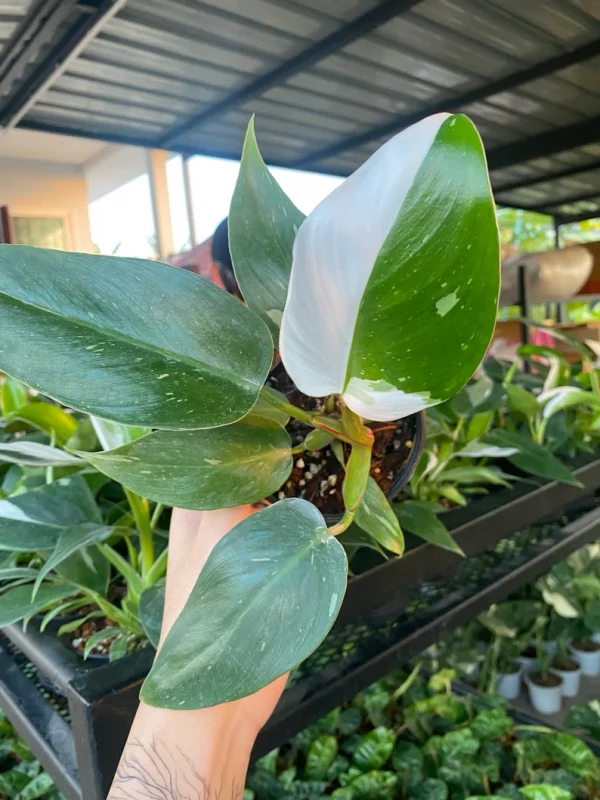
The Pink Princess Philodendron occupies a unique niche in the variegated plant world: it is the only widely available Philodendron that produces deep pink variegation alongside its dark green and almost black leaves. The contrast is extraordinary — almost unbelievable as a naturally occurring pattern.
What makes it special: Pink variegation in plants is extremely rare. Most variegated plants produce white, cream, or yellow non-chlorophyll zones. The Pink Princess’s pink sections are produced by anthocyanin pigmentation — a different biological mechanism that creates warm rose to deep fuchsia tones depending on light levels and growing conditions.
What to expect from care: As a chimeric variety, the Pink Princess requires bright indirect light to maintain its pink variegation. In lower light, new leaves emerge darker and with less pink. High humidity (60–75%) supports healthy growth. It tends to grow more slowly than many Philodendrons, which is part of what drives its collector value.
Why collectors love it: The pink variegation is simply unlike anything else in the houseplant world. A heavily pink-variegated specimen with the characteristic dark chocolate and rose leaf pattern is one of the most visually dramatic plants available for indoor growing.
5. Monstera ‘Mint Variegata’ — The Ultra-Rare
Category: Chimeric variegated · Difficulty: Advanced
The Monstera Mint Variegata is among the rarest and most discussed variegated plants in the collector community. Unlike the white variegation of the Albo or the cream speckling of the Thai Constellation, the Mint features a distinctive pale mint-green variegation — softer and more ethereal than stark white, but no less striking.
What makes it special: The mint colouration is unusual among variegated aroids. Rather than the sharp white-on-green contrast of the Albo, the Mint produces a more nuanced, painterly effect — pale sage and mint washes over deep fenestrated green. Specimens with high mint coverage are exceptionally rare and command premium prices.
What to expect from care: The Mint is a demanding plant. As a chimeric variety it is highly light-sensitive, requiring very bright indirect light to maintain its variegation. It also tends to be a slower grower than the Albo, making each new leaf more precious. It rewards expert care with its most spectacular foliage.
Why collectors love it: Rarity drives a significant portion of its appeal. A well-grown Mint Variegata in a collection immediately signals the seriousness of the collector. Its distinctive colouration also ensures it never looks the same as other variegated Monsteras.
👉 Explore Monstera Mint Variegata at variegatedplantscircle.com
6. Philodendron Billietiae Variegated — The Statement Climber
Category: Moderately stable variegated · Difficulty: Intermediate
The Philodendron Billietiae is remarkable even in its non-variegated form — long, narrow, corrugated leaves with distinctive orange petioles that can reach extraordinary sizes in maturity. The variegated form adds cream and yellow splashing across these dramatic leaves, creating one of the most architecturally striking variegated plants available.
What makes it special: The Billietiae Variegated grows as a vigorous climber. Given a moss pole or support structure, it produces increasingly large leaves as it matures — creating a dramatic vertical plant statement. The combination of leaf shape, orange petioles, and cream variegation is unlike any other aroid available.
What to expect from care: More forgiving than chimeric Monsteras. The Billietiae appreciates bright indirect light and moderate to high humidity but handles care with reasonable flexibility. It is a faster grower than many collector Philodendrons, which is rewarding for collectors who enjoy watching their plants develop quickly.
Why collectors love it: It is impressive in a fundamentally different way from compact, leafy aroids. The Billietiae makes a statement through scale and architecture rather than leaf pattern alone — making it a standout specimen in any collection.
👉 Find Philodendron Billietiae Variegated at variegatedplantscircle.com
7. Rhaphidophora Tetrasperma Variegated — The Compact Collector Favourite
Category: Chimeric variegated · Difficulty: Intermediate
The Rhaphidophora Tetrasperma — commonly called the Mini Monstera despite being neither a Monstera nor particularly mini in maturity — has become one of the most popular aroids in the collector community. Its variegated form, with white or pale green splashing across its fenestrated leaves, is highly sought after and considerably more compact than the larger Monsteras.
What makes it special: The Rhaphidophora Tetrasperma grows faster than most variegated aroids, which means new leaf production is more frequent — a very satisfying quality in a chimeric variety where each new leaf is unpredictable. It also adapts well to smaller indoor spaces while still delivering genuine collector-grade variegation.
What to expect from care: Bright indirect light is important for variegation maintenance, though the Tetrasperma handles slightly lower light levels better than Monstera Albo. It appreciates high humidity and consistent moisture. Its faster growth rate means it benefits from regular fertilisation during the growing season.
Why collectors love it: The combination of collector-grade chimeric variegation, manageable size, and faster growth rate makes it one of the most rewarding variegated aroids to grow. It is also more attainable price-wise than large Monstera specimens, making it an excellent entry point for serious collectors.
👉 Shop Rhaphidophora Tetrasperma Variegated at variegatedplantscircle.com
8. Philodendron ‘Florida Beauty’ Variegated — The Multi-Lobed Marvel
Category: Moderately stable variegated · Difficulty: Intermediate
The Florida Beauty is one of the most distinctive Philodendrons in the collector world — a hybrid with deeply lobed, multi-fingered leaves that are unlike the simpler leaf shapes of most aroids. The variegated form produces cream, white, and pale yellow splashing across these extraordinary leaves, creating a plant that is simultaneously bold and intricate.
What makes it special: The leaf shape of the Florida Beauty is immediately recognisable and genuinely distinctive. Combined with variegation, each leaf becomes a complex, multi-lobed artwork. It also tends to develop attractive texture and colouration on its petioles as it matures, adding interest beyond the leaves themselves.
What to expect from care: The Florida Beauty is reasonably accommodating for a collector-grade plant. It appreciates bright indirect light and high humidity but handles typical indoor conditions well with attentive care. As a hybrid, it is generally more robust than many of the pure species chimeric varieties.
Why collectors love it: Its leaf shape sets it entirely apart from every other variegated plant in a collection. While Monstera and Philodendron leaves can begin to look similar across a large collection, the Florida Beauty’s distinctive multi-lobed form ensures it always stands out.
👉 Browse Florida Beauty at variegatedplantscircle.com
9. Philodendron Domesticum Variegated — The Underrated Gem
Category: Moderately stable variegated · Difficulty: Beginner–Intermediate
The Philodendron Domesticum Variegated is one of the most underappreciated plants in the collector world — consistently overshadowed by the more famous Monsteras and Caramel Marbles despite producing spectacular cream and white variegation on long, spade-shaped leaves with a distinctive glossy finish.
What makes it special: The Domesticum Variegated tends to produce more consistent variegation than many chimeric varieties, with cream and white splashing that appears reliably on consecutive leaves. Its glossy leaf surface gives the variegation an almost luminous quality — particularly striking when a new leaf unfurls.
What to expect from care: One of the more forgiving collector-grade variegated Philodendrons. The Domesticum handles moderate humidity and slightly less intense light than the most demanding chimeric varieties, making it a good choice for collectors who want genuine collector-grade variegation with somewhat more flexible care requirements.
Why collectors love it: It offers genuine collector-grade beauty at a more accessible price point than the most coveted varieties. For collectors building a collection, it provides extraordinary visual impact without the maximum care demands and expense of the top-tier chimeric plants.
👉 Shop Philodendron Domesticum Variegated at variegatedplantscircle.com
10. Scindapsus Pictus ‘Exotica’ — The Silver Standard
Category: Stable (DNA-encoded) · Difficulty: Beginner
Not every popular variegated plant needs to be a rare, high-value collector specimen. The Scindapsus Pictus Exotica deserves its place on this list precisely because it delivers extraordinary visual impact — silver-splashed, satin-textured leaves that catch light beautifully — in a package that virtually any collector can successfully grow.
What makes it special: The silver variegation of Scindapsus Pictus is fundamentally different from the white of Monstera Albo or the cream of Thai Constellation. It has a metallic, almost iridescent quality that is uniquely beautiful and photographs magnificently. The ‘Exotica’ cultivar features larger silver patches than the more common ‘Argyraeus’ form.
What to expect from care: Genuinely easy. The Scindapsus Pictus Exotica tolerates medium indirect light without losing its silver markings, handles inconsistent watering with grace, and grows readily in typical indoor humidity levels. It is perhaps the most beginner-friendly genuinely beautiful variegated plant available.
Why collectors love it: It earns its place in even the most advanced collections through pure aesthetic quality. The silver-on-green effect is sophisticated and distinctive — a refreshing contrast to the white-and-green palette that dominates the collector aroid world.
11. Monstera Adansonii Variegated — The Rare Fenestrated Gem
Category: Chimeric variegated · Difficulty: Intermediate–Advanced
The Monstera Adansonii in its standard form is beloved for its heavily fenestrated, hole-filled leaves. The variegated form is considerably rarer — combining those distinctive fenestrations with white or cream variegation to create one of the most intricate and visually complex leaves in the variegated plant world.
What makes it special: The combination of fenestrations (holes) and variegation creates a leaf that is simultaneously delicate and dramatic. The white sections, already structurally compromised by the presence of holes throughout the leaf, create extraordinary visual complexity — light passes through both the fenestrations and the translucent white sections, producing a layered, lacy effect.
What to expect from care: As a chimeric variety, it shares the light sensitivity of Monstera Albo. Bright indirect light is essential. It tends to grow as a vining plant and benefits from a support structure. High humidity supports healthy growth and helps prevent browning of the white leaf sections.
Why collectors love it: Its extreme rarity combined with genuinely extraordinary leaf structure makes it one of the most discussed and sought-after rare plants in the collector community. A healthy, well-variegated specimen is a remarkable achievement and a centrepiece of any serious collection.
👉 Explore Monstera Adansonii Variegated at variegatedplantscircle.com
12. Philodendron ‘Ring of Fire’ Variegated — The Fiery Collector Piece
Category: Stable hybrid · Difficulty: Intermediate
The Philodendron Ring of Fire is a complex hybrid with deeply serrated, multi-lobed leaves that emerge in remarkable shades of red, orange, yellow, and cream before maturing through various stages of green. The variegated form amplifies this colour show with additional cream and white zones that interact with the natural new-leaf colouration to create extraordinary multi-toned leaves.
What makes it special: The serrated leaf edges combined with multi-tonal new growth and variegation create a plant that looks almost artificially dramatic — as though it could only exist as a botanical illustration rather than a real houseplant. In reality, it is a robust and rewarding hybrid that delivers its spectacular appearance reliably.
What to expect from care: The Ring of Fire is more stable than most chimeric varieties, making it somewhat more forgiving. It appreciates bright indirect light to maintain its vivid new-leaf colouration and does best with moderate to high humidity. It grows at a satisfying pace for a collector hybrid.
Why collectors love it: The theatrical quality of its new growth — that fiery emergence of red and orange before the mature leaf settles into its final multi-toned form — makes it one of the most exciting plants to watch growing in real time.
👉 Browse Philodendron Ring of Fire Variegated at variegatedplantscircle.com
Building a Balanced Variegated Plant Collection
Rather than simply collecting every popular variety available, the most satisfying variegated collections are built with intention — mixing varieties across several key dimensions.
Mix stable and chimeric varieties. Balance the predictability of tissue-culture stable plants like Thai Constellation with the excitement of chimeric varieties like Monstera Albo. This gives you reliable, consistent beauty alongside the thrilling unpredictability of plants that surprise you with each new leaf.
Mix size and scale. Combine large architectural specimens like Philodendron Billietiae with compact climbers like Rhaphidophora Tetrasperma. A collection with plants at multiple scales and growth habits is more visually interesting than a collection of similarly sized specimens.
Mix leaf shapes. Round leaves, elongated leaves, fenestrated leaves, serrated leaves, lobed leaves — diversity of form within a collection of variegated plants creates a cohesive but visually dynamic display.
Mix care requirements thoughtfully. If you are new to collector plants, build your collection gradually from more forgiving varieties toward the most demanding ones. Each plant you successfully keep teaches you the skills needed for the next level of rarity.
Where to Find All These Varieties in One Place
One of the most frustrating aspects of collecting rare variegated plants used to be that each variety required a different source — a different seller, a different country, a different wait time. That fragmentation has been solved by dedicated specialist stores that carry multiple rare categories under one roof.
Variegated Plants Circle carries all of the most popular collector varieties discussed in this guide — Monstera Albo, Caramel Marble Philodendron, Monstera Mint Variegata, Florida Beauty, Rhaphidophora Tetrasperma Variegated, Philodendron Billietiae Variegated, Philodendron Domesticum Variegated, and more — with worldwide shipping, phytosanitary certificates, and a 30-day live arrival guarantee on every order.
👉 Browse the complete collection at variegatedplantscircle.com/shop
Whether you are starting your first collector-grade variegated plant or adding to an established collection, the full range is available in one place — curated, expertly packaged, and shipped to your door anywhere in the world.
Quick Reference: Popular Variegated Plants at a Glance
| Plant | Variegation Type | Difficulty | Collector Status | Best For |
|---|---|---|---|---|
| Monstera Albo Variegata | Chimeric | Advanced | Icon | Centrepiece specimens |
| Monstera Thai Constellation | Tissue-culture stable | Beginner | Prestige accessible | First collector plant |
| Philodendron Caramel Marble | Semi-stable | Intermediate | Rising star | Colour drama |
| Philodendron Pink Princess | Chimeric | Intermediate | Unique pink variegation | Colour collectors |
| Monstera Mint Variegata | Chimeric | Advanced | Ultra-rare | Serious collectors |
| Philodendron Billietiae Var. | Moderately stable | Intermediate | Architectural | Large-scale displays |
| Rhaphidophora Tetrasperma Var. | Chimeric | Intermediate | Compact collector | Smaller spaces |
| Florida Beauty Variegated | Moderately stable | Intermediate | Distinctive leaf shape | Diversity collectors |
| Philodendron Domesticum Var. | Moderately stable | Beginner–Int. | Underrated gem | Value-conscious collectors |
| Scindapsus Pictus Exotica | Stable | Beginner | Silver standard | All collectors |
| Monstera Adansonii Var. | Chimeric | Advanced | Ultra-rare | Serious collectors |
| Philodendron Ring of Fire Var. | Stable hybrid | Intermediate | Theatrical drama | Show specimens |
Frequently Asked Questions
Which variegated plant is easiest for beginners? Scindapsus Pictus Exotica and Monstera Thai Constellation are both excellent starting points. Both have stable, non-reverting variegation, handle care with flexibility, and deliver genuine collector-grade beauty without the maximum demands of chimeric varieties.
Which variegated plant is the most valuable? Among commonly available collector plants, well-variegated Monstera Albo specimens and Philodendron Caramel Marble plants command the highest prices consistently. Ultra-rare variants like Monstera Mint Variegata with exceptional mint coverage can exceed these at auction.
Are variegated plants good for offices? Yes, with the right selection. Monstera Thai Constellation, Philodendron Billietiae Variegated, and Scindapsus Pictus all adapt reasonably well to office conditions provided adequate light is available — either natural or supplemented with a grow light.
Can I keep multiple variegated plants in the same space? Absolutely — and grouping variegated plants together is one of the most effective ways to display them. They create a humidity microclimate for each other and their combined visual impact is extraordinary. Just ensure each plant has adequate light and airflow to prevent disease.
Do variegated plants grow slower than regular plants? Generally yes. Because they photosynthesise less efficiently than fully green plants, most variegated varieties grow more slowly. This is most pronounced in heavily white-variegated specimens. The trade-off — extraordinary leaf beauty — is considered well worth it by collectors worldwide.
Which variegated plants can I find at variegatedplantscircle.com? The full collection includes Monstera Albo Variegata, Caramel Marble Philodendron, Monstera Mint Variegata, Florida Beauty, Rhaphidophora Tetrasperma Variegated, Philodendron Billietiae Variegated, Philodendron Domesticum Variegated, Philodendron Bipennifolium Variegated, Philodendron Ilsemanii Variegata, Philodendron Ring of Fire Variegated, White Princess Philodendron, Monstera Adansonii Variegated, and Pachypodium — all shipped worldwide with phytosanitary certificates and a 30-day live arrival guarantee.
👉 Browse the full collection at variegatedplantscircle.com/shop
For more plant guides visit our blog at variegatedplantscircle.com · Explore the full rare plant catalogue at variegatedplantscircle.com/shop · Questions? Contact us here · Email: sales@variegatedplantscircle.com
